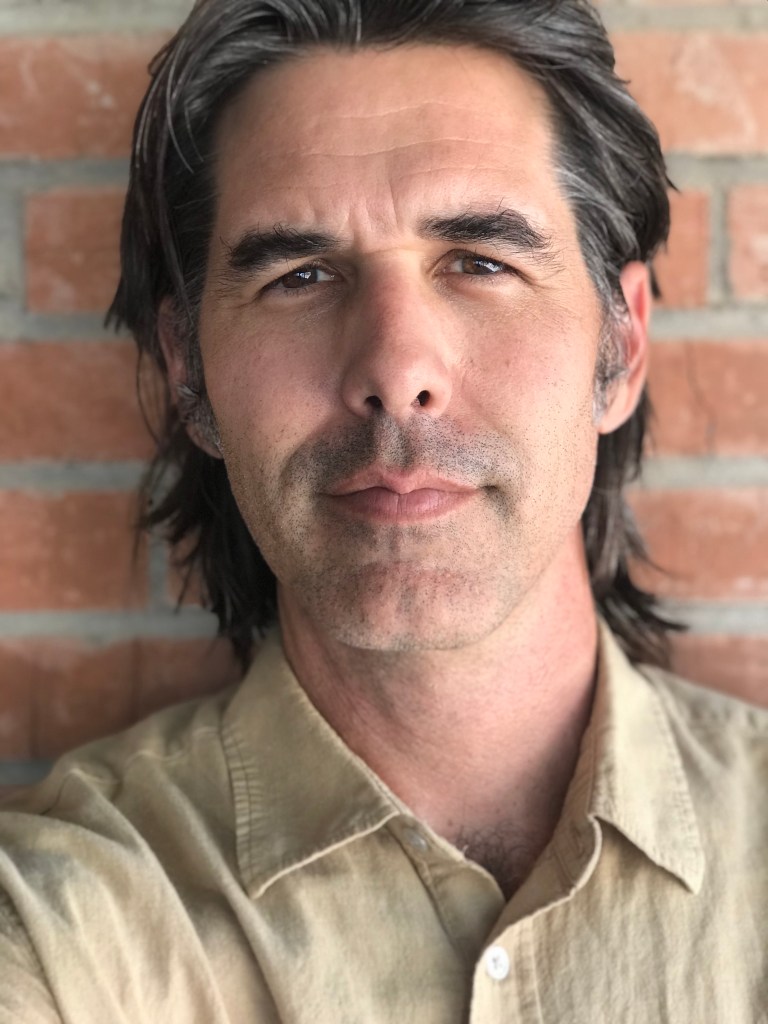
Scott Warren lives in Ajo, Arizona. He is a geographer by training, having earned his PhD at Arizona State University. His research examines social, political, and ecological dimensions of land tenure, resource extraction, and immigration in the southern Arizona borderland. He has taught a number of geography courses on topics including the Mexico-U.S. borderland, the U.S. Southwest, Global Environmental Change, Urban Geography, and Cartography. He is a member of the Western Pima County Community Council, a non governmental community advisory board representing the residents of Ajo, Why, and Lukeville. He is also a Designated Campus Colleague attached to the Southwest Center at the University of Arizona. He has volunteered with border humanitarian aid groups for over a decade, and in 2018 he faced misdemeanor and felony charges related to this work. His experience as a defendant in the resulting federal trials is the topic in his ongoing speaking, discussion, and facilitation series.
————
Extended Statement
Scott was born and raised in the high desert of Alturas, California and Reno, Nevada. He completed a B.S. in Geography at the University of Nevada, Reno, a M.S. in Earth Sciences at Montana State University, and a PhD in Geography at Arizona State University. In 2013 he moved to Ajo, Arizona, and began volunteering with the border humanitarian aid groups No More Deaths and Ajo Samaritans. Through this volunteer work he learned skills needed to navigate the full spectrum of emotional, relational, technical, and logistical challenges of border humanitarian aid. As a result, he became more adept at facilitating groups in difficult and emotionally charged situations. His approach to facilitation and teaching is now informed by these skills, and by continuing to learn how past traumas affect us in the present and how the institutions in our lives often cause harm. His own path through the terrain of emotional and relational healing informs his approach, too
Teaching. Scott has taught college courses in person, online, in the field, and through correspondence. He has held post doc, adjunct, and lecturer positions. He previously taught in the Maricopa Community Colleges system, at Arizona State University, at the University of Arizona, and at Tohono O’odham Tribal Community College. Most recently he taught correspondence courses for the University of Oregon’s Prison Education Program, working with incarcerated students in a number of institutions across that state.
A geographical perspective. At the University of Nevada, Reno, Scott learned to think about places and landscapes with nuance and care. At Montana State University he wrote his masters thesis on the historical geography of Poplar, Montana, a small town in the Great Plains portion of that state which serves as the headquarters for the Fort Peck Assiniboine and Sioux Nation. At Arizona State University Scott learned to love the Sonoran Desert, a place where Indigenous O’odham nations have long prospered and where Mexico and the U.S. now come together at the border. His PhD dissertation at Arizona State University was on the topic of Ajo’s cultural geography, and how the town has been shaped by a transition from the copper mining industry in the 20th century to the border security industry in the 21st century.
Broadly speaking, the geographical perspective is one that can be traced back through many different lineages of thought and action. For Scott, one essential pathway of learning that leads geographers to a deeper understanding of place and landscape is already established in those Indigenous approaches that hold a container of care for the totality of place, including its people, land, water, animals, issues, and other essential qualities.
Collaboration. From fellow border humanitarian aid volunteers Scott learned how to facilitate groups in difficult and emotionally charged situations. From family, friends, partners, meditation teachers, therapists, and yoga instructors he learned the importance of honest self reflection, presence, and how our experiences are embodied and shared in relationship with others. Working with environmental historians Scott learned to appreciate the depth of time in shaping places, and how to tell stories about those places through historical narrative. Photographers taught him to see landscapes in new ways, and how a set of coherent and compelling images communicates just as much as any text. The words of his PhD adviser are especially relevant in his ongoing relationship to Ajo and the surrounding border area, reminding him that the best works about the U.S.-Mexico borderland are those that embrace the region as a fully authentic place.
Work. Scott communicates insights about place and landscape through writing, public speaking, and maps. Teaching college courses and doing GIS/cartography on a consultation basis form the core of his income, work which he optimistically calls free-lance geography. In doing this free-lance geography Scott endeavors to keep one foot in academia and one foot in the community. He is currently working on an article about the early mining history of Ajo, and a book about his experiences as a geographer, humanitarian aid volunteer, and defendant during the years 2017-2020. His ongoing speaking, discussion, and facilitation series serves several goals, including educating the public about the border and its issues, connecting with those who are doing good work, organizing his thoughts for the book, providing a modest income, and learning insights and receiving helpful feedback from others.
C.V. below.

